


Light Therapy for the Indoors: How Human-Centric Lighting Boosts Mental Health
4/20/20252 min read
Mental Health Needs More Than Talk - It Needs Light
As conversations around mental health become more mainstream, organizations and individuals are seeking holistic, science-backed ways to support emotional wellness. One of the most powerful tools we often overlook? Lighting.
Human-Centric Lighting (HCL) - a lighting system designed to support our natural biological rhythms - is emerging as a non-invasive, effective strategy to improve mood, reduce stress, and enhance mental resilience.
Lighting and the Brain: The Biological Connection
Light is the primary zeitgeber - a signal that tells our body what time it is. Exposure to bright light in the morning helps suppress melatonin and boost cortisol, making us feel alert and energized. Conversely, warm, dim light in the evening supports relaxation and sleep.
In indoor environments with poor lighting - especially in winter months - this balance can be disrupted. People often experience:
Mood dips.
Increased stress.
Sleep difficulties.
Symptoms of Seasonal Affective Disorder (SAD).
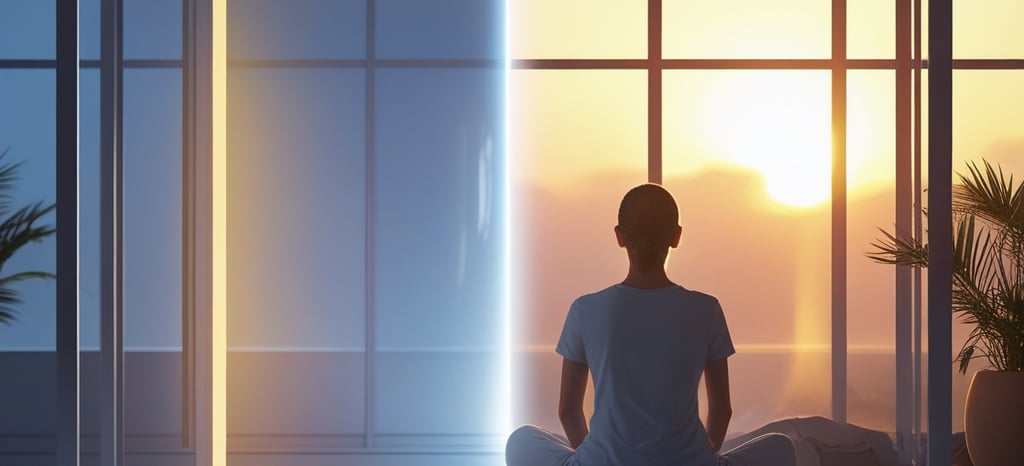
HCL restores that balance by mimicking the natural arc of daylight, creating lighting conditions that help regulate hormones, stabilize mood, and reduce mental fatigue.
A Tool for Everyday Resilience
When used strategically in homes, offices, schools, or hospitals, Human-Centric Lighting doesn’t just make spaces look better - it makes people feel better. Benefits observed in various environments include:
Improved sleep quality.
Reduced depressive symptoms.
Enhanced cognitive performance.
Greater emotional stability during high-stress periods.
These are not just anecdotal. Studies show that exposure to biologically aligned lighting can enhance mental health outcomes, particularly for people working long hours indoors or with limited access to daylight.
Designing for Wellbeing
Integrating HCL doesn’t mean starting from scratch. It starts with small, smart changes:
Tunable white light that shifts throughout the day.
Automated lighting systems synced with the time and season.
Layered lighting design that blends ambient, task, and natural light.
Use of cooler light in the morning to stimulate alertness, and warmer tones in the evening to promote calm.
As awareness grows around the impact of the built environment on mental health, light is emerging as a core element of restorative design - a low-intervention solution with high emotional return.
Let’s Rethink What Wellness Looks Like
Mental health support doesn't always require a new app or another meeting. Sometimes, it starts with something as fundamental as how we light the spaces around us.
In a world where we spend up to 90% of our time indoors, Human-Centric Lighting offers a simple, scalable way to reconnect our bodies with the rhythms they were designed for - one sunrise - mimicking LED at a time.
📩 Want to explore how HCL can transform your space?
At IUNU, we help organizations integrate light that truly works for people.
Sources
Lighting Europe. Human Centric Lighting Position Paper, 2015
Lam, R. W. et al. (2016). Efficacy of bright light treatment for depression. JAMA Psychiatry
Vandewalle, G. et al. (2007). Light as a modulator of cognitive brain function. NeuroImage
Viola, A. U. et al. (2008). Blue-enriched white light improves workplace alertness and sleep. Biological Psychology
Cajochen, C. et al. (2011). Evening exposure to LED screens affects circadian physiology. Physiology & Behavior
WELL Building Standard – International WELL Building Institute
Fraunhofer Institute IAO – Human-Centric Lighting Research Program
Human-Centric Lighting
Discover the benefits
CONTACTS
info@iunu.it
© 2024. All rights reserved